
Last updated August 27, 2026
Free in-home measure and quote - PGT, CGI and CWS impact lines compared on your actual openings, style by style
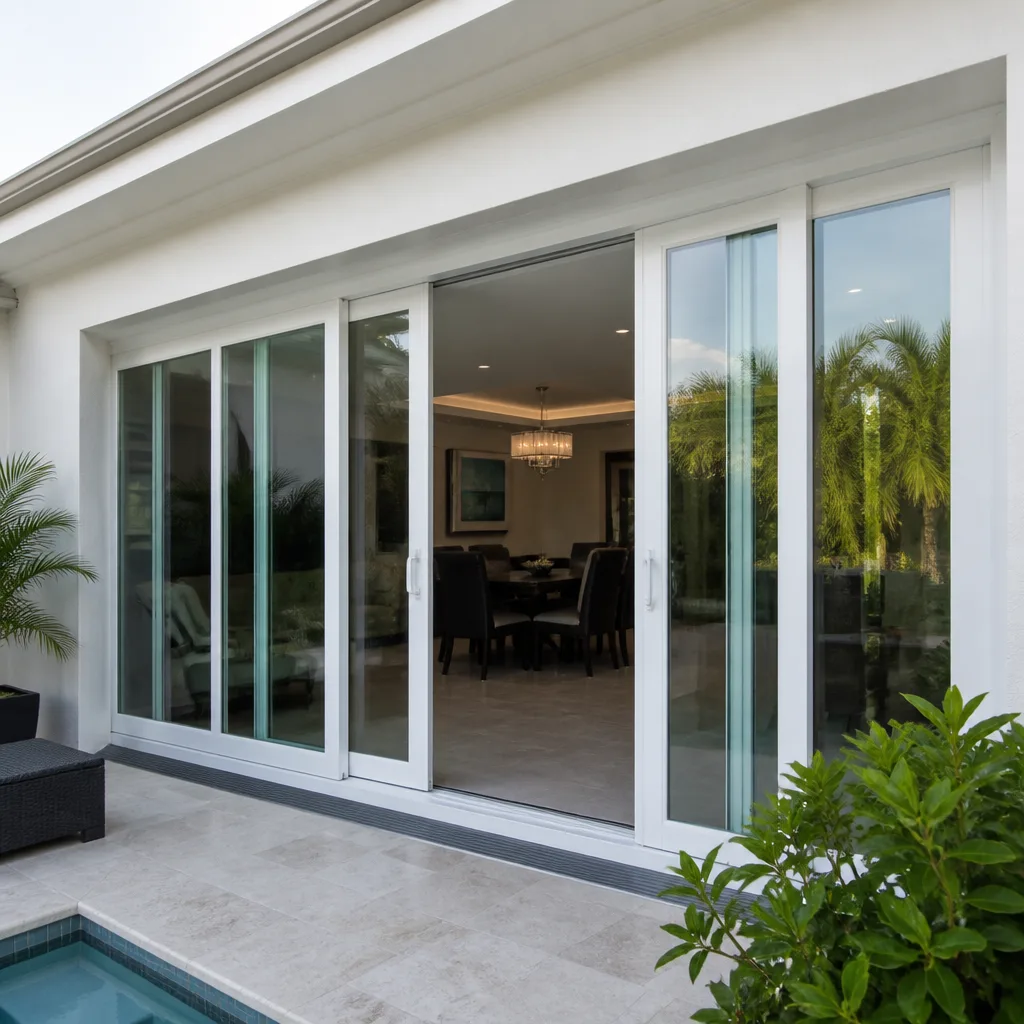
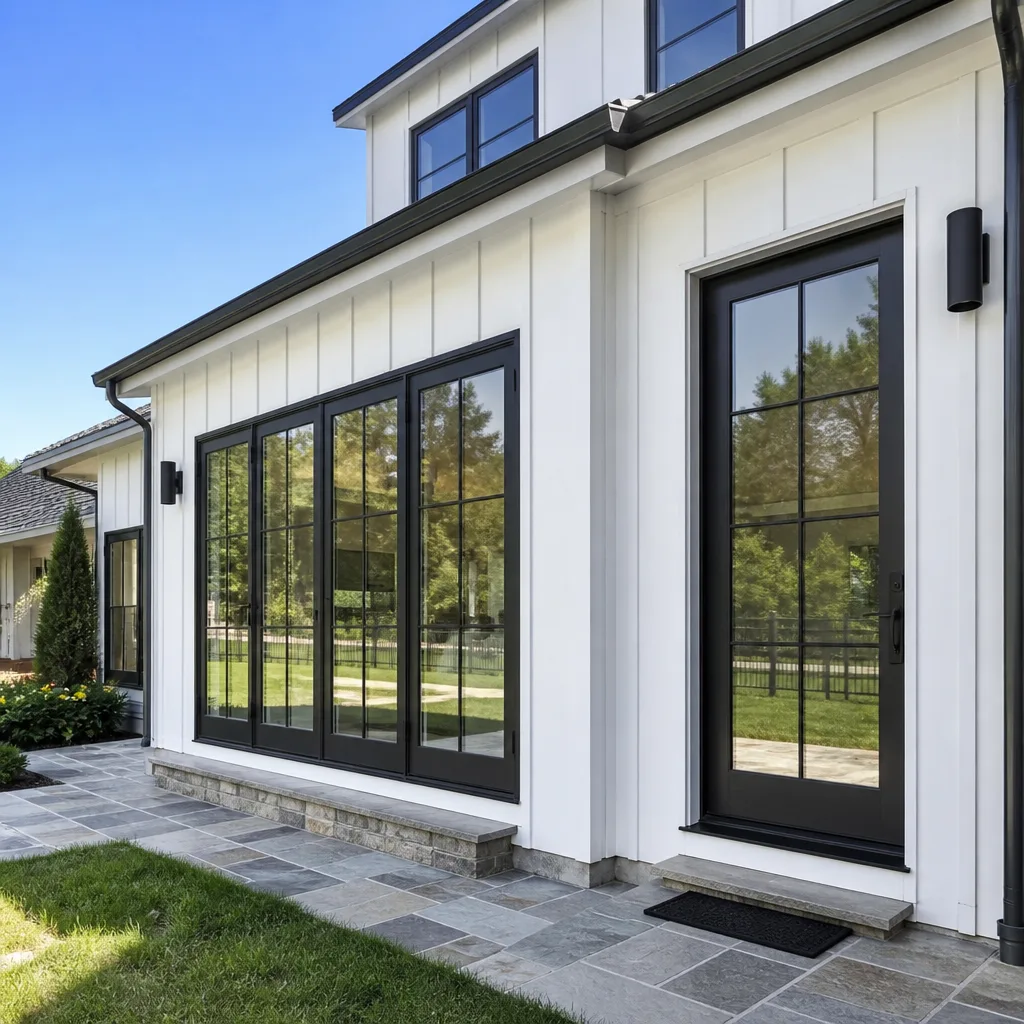
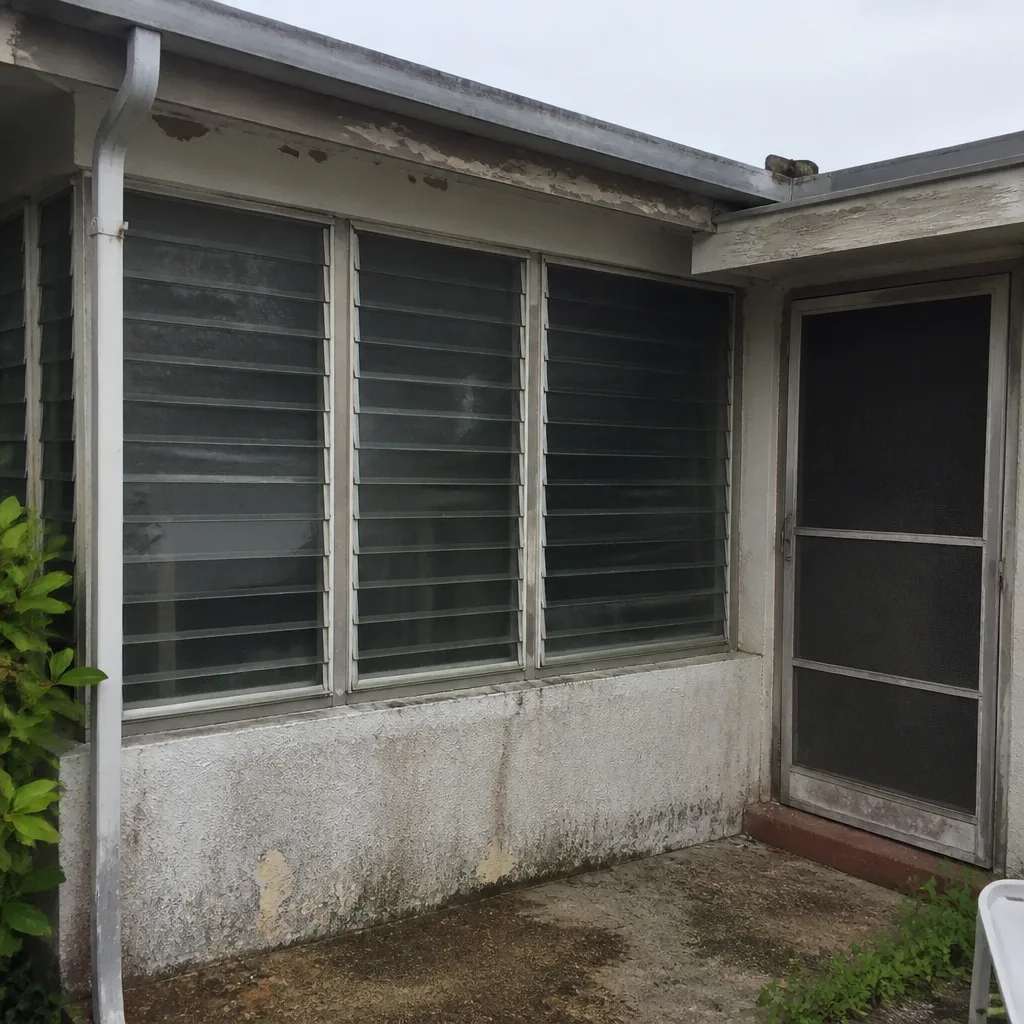 Before
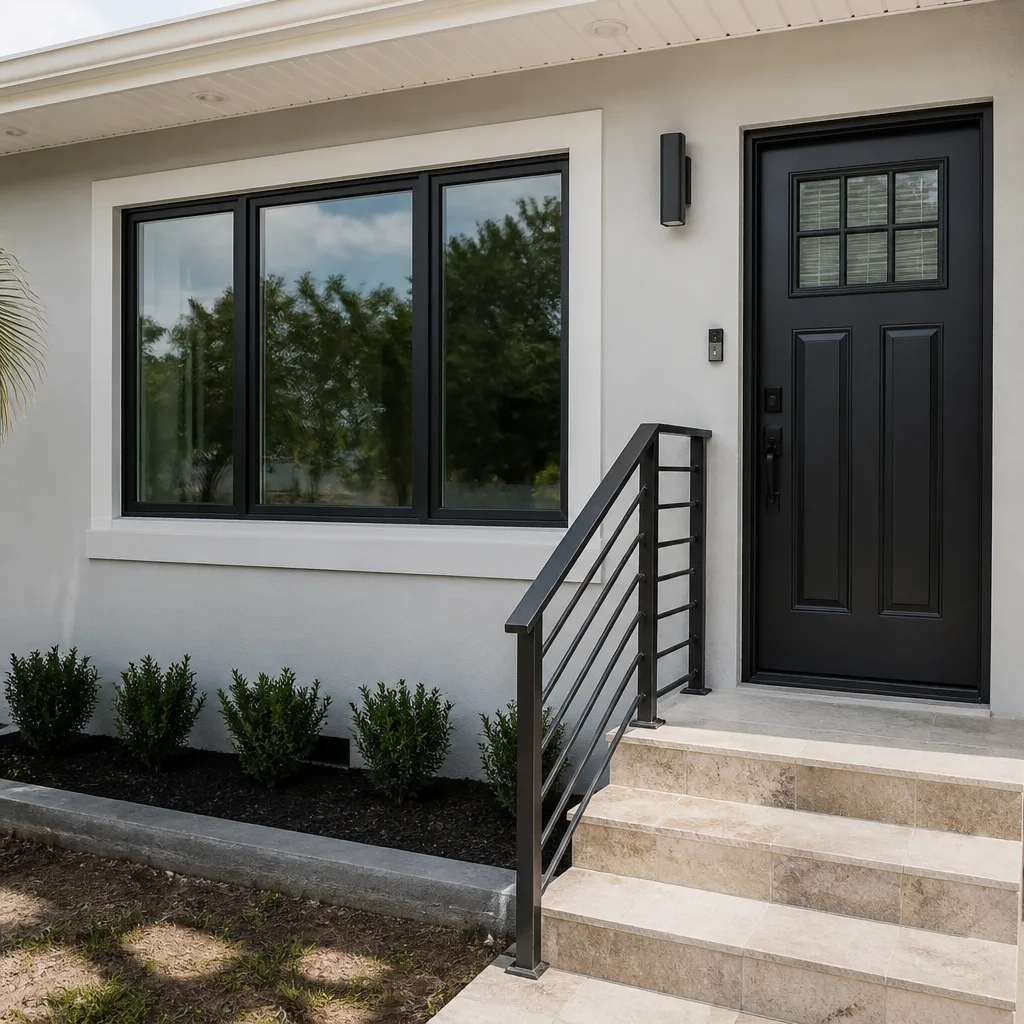 After
After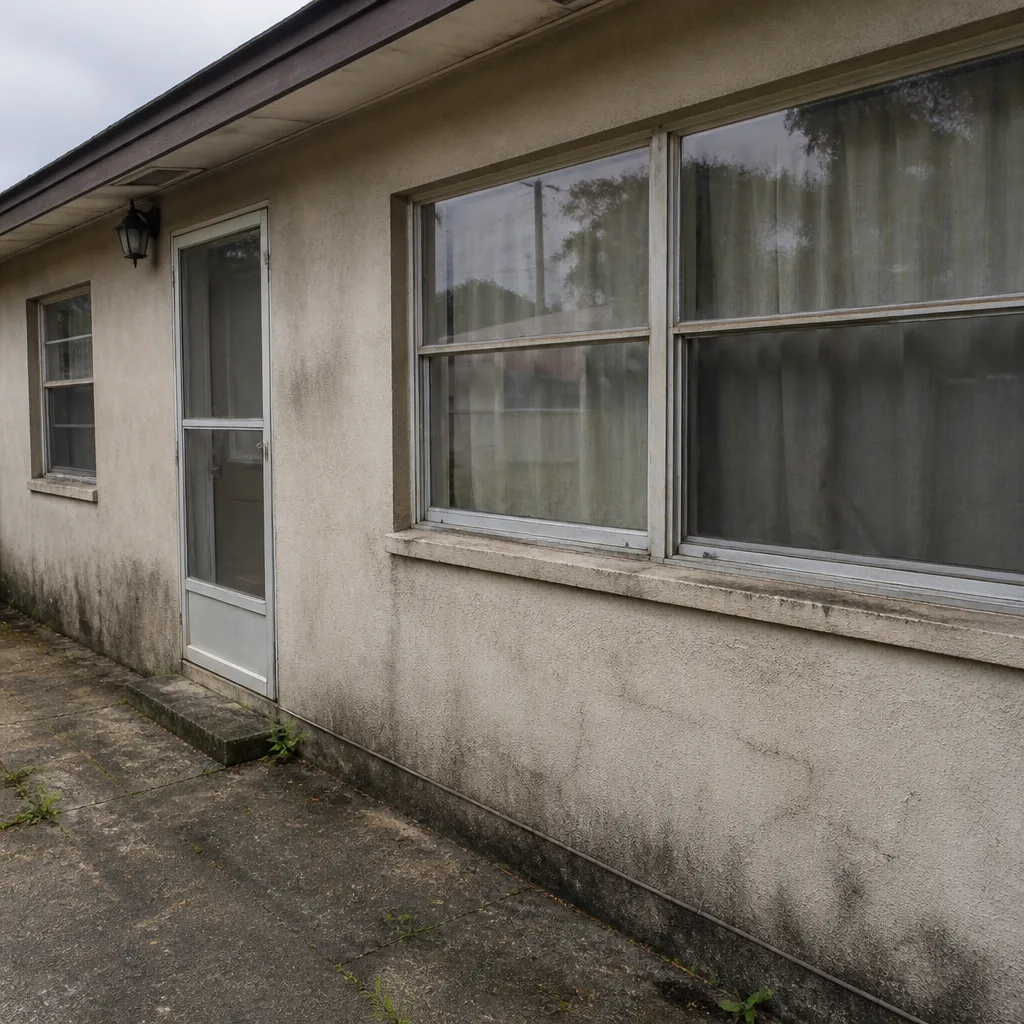 Before
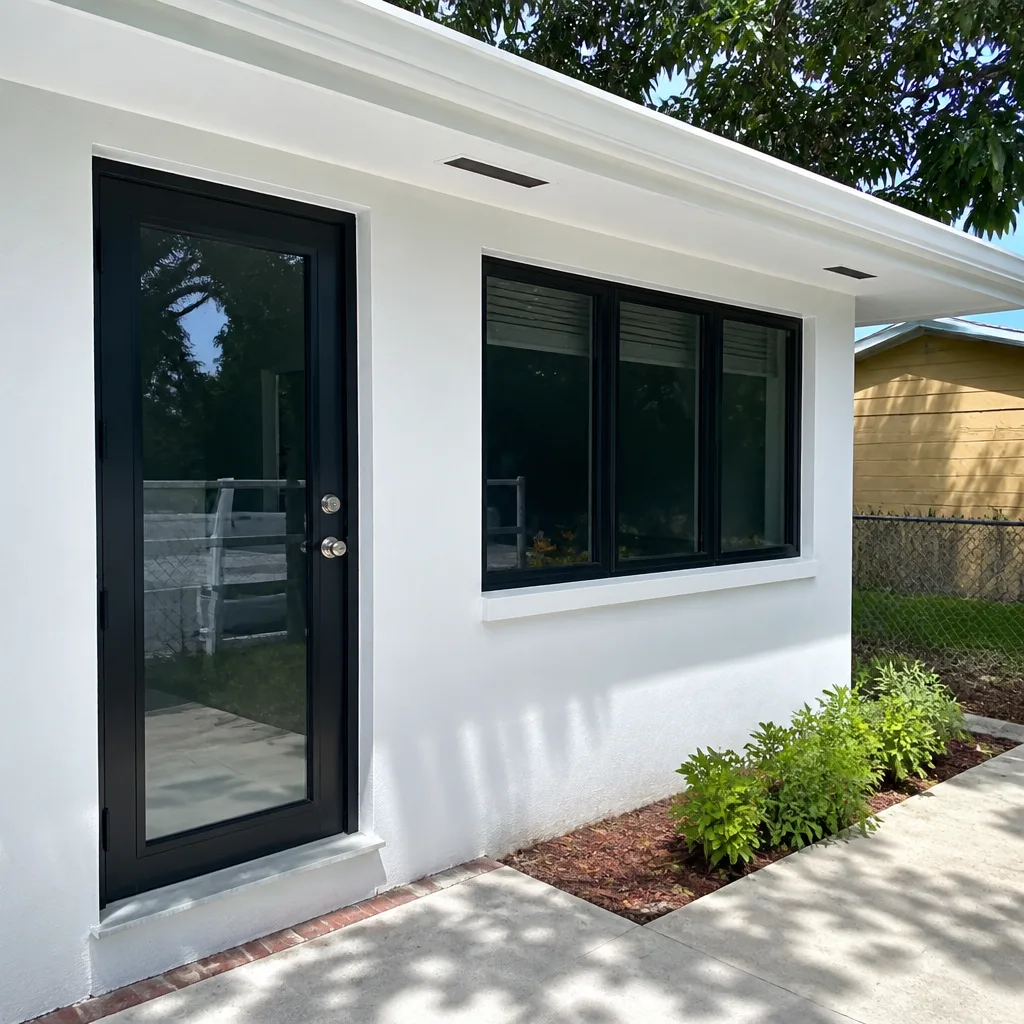 After
After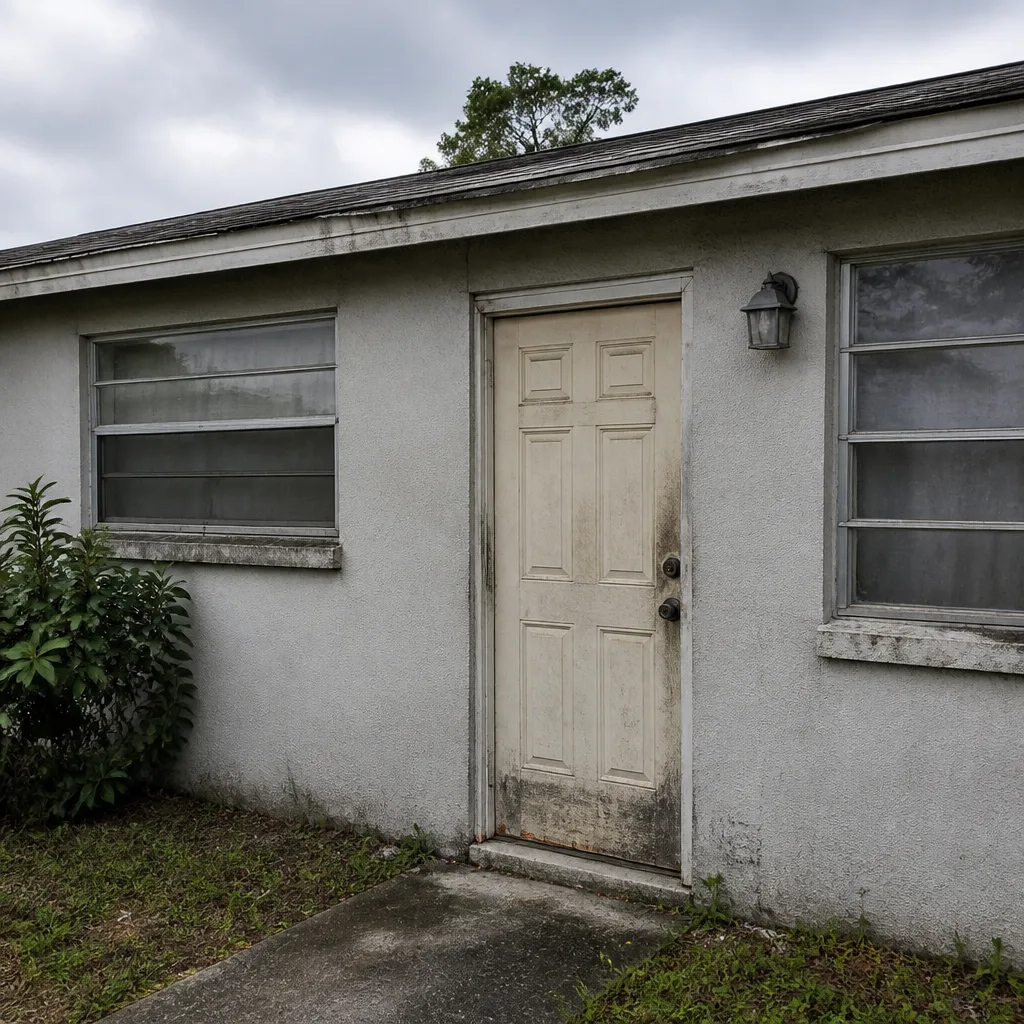 Before
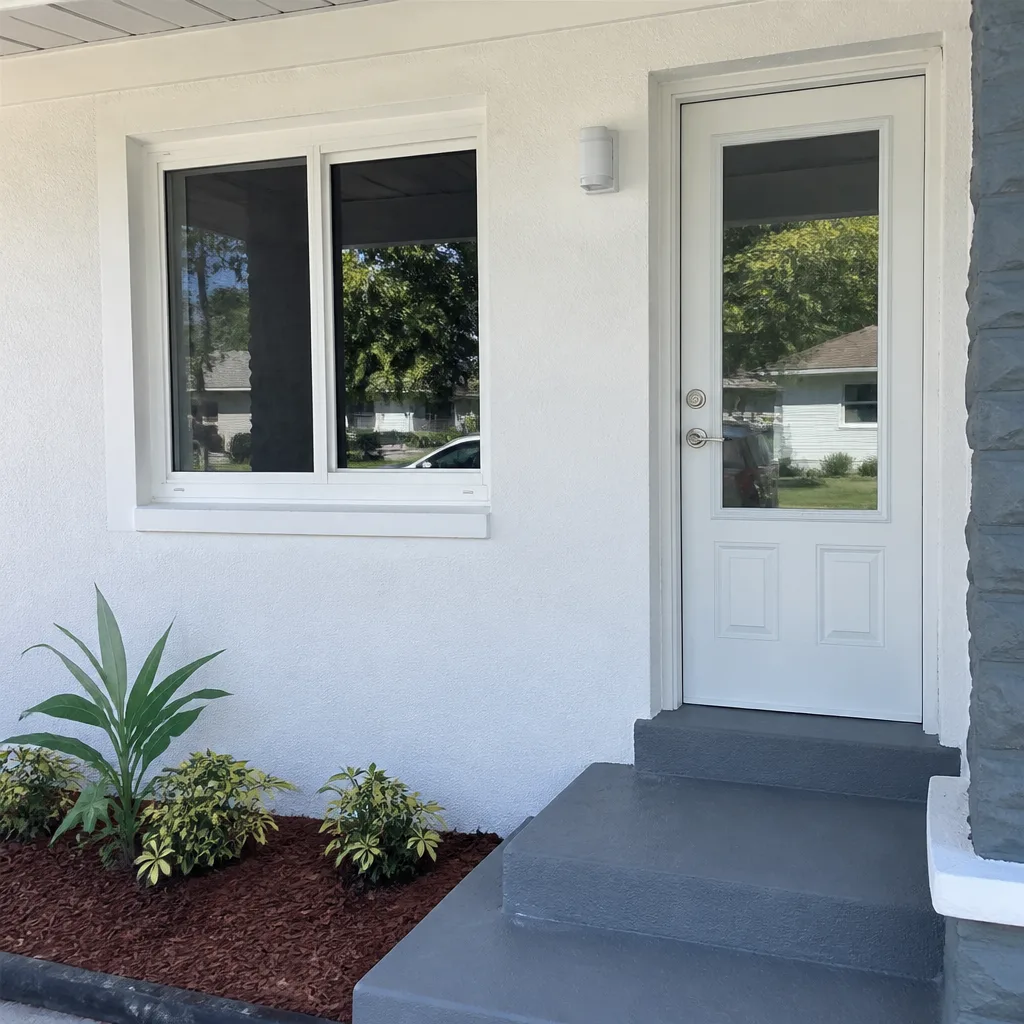 After
AfterWindows & Doors Warning Signs: A Gladeview Homeowner’s Reference Guide
Here’s a fact that surprises most Gladeview homeowners: the window that fogs between the panes isn’t just a cosmetic annoyance. In Miami-Dade’s High Velocity Hurricane Zone, a failed insulated glass unit can compromise the impact rating of the entire window assembly. That single pane of fogged glass may be the difference between a window that holds during a Category 4 and one that doesn’t. Most warning sign articles tell you to look for broken glass and rotted wood. This guide goes deeper, into the early signals specific to Gladeview’s climate: the condensation pattern that spells a failed IGU, the door drag that reveals slab settlement on South Florida limestone, and the corrosion sequence that quietly eats aluminum impact frames. We’ll show you which signs are cosmetic, which are structural, and which need a professional’s eyes before the next storm season.
Quick Answer
Early warning signs of window and door failure in Gladeview homes include condensation between glass panes (failed insulated glass), visible corrosion pitting on aluminum frames (especially within four miles of the coast), doors that drag or stick at the header (slab settlement, not hinge wear), and multipoint locks that take two or three seconds to engage. If you notice any of these, address them now, because in Gladeview’s salt-air climate and HVHZ code zone, these problems escalate from a few hundred dollars in repair to full-frame or full-door replacement faster than in almost any other U.S. market. Call (727) 604-9322 for a free estimate from a Gladeview company that’s been watching these exact failures for over a decade.
Table of Contents
- The Condensation Pattern That Spells a Failed IGU
- The Four-Stage Corrosion Progression on Aluminum Impact Frames
- Thermal Gaps vs. Sealant Failure: What Humidity in the Wall Cavity Actually Looks Like
- Door Drag on Slab-on-Grade Homes: What Hinge-Side Gaps Reveal About Settlement
- The Slow Multipoint Lock: Why a Two-Second Delay Is a Safety Warning
- The Garden Hose Threshold Test: Finding Door Failures Before the Next Storm
- Energy Bill Spikes: The Silent Warning Sign Most Gladeview Homeowners Miss
- Impact Glass Degradation: What HVHZ Homeowners Need to Know
The Condensation Pattern That Spells a Failed IGU
A window that fogs between the panes isn’t just a cosmetic issue in Gladeview. In an impact-rated window, that fog is your visible proof that the insulated glass unit (IGU) has lost its hermetic seal, and with it, the argon or krypton gas fill that provided much of the unit’s insulating power. Here’s the part almost nobody is told at the point of purchase: a failed IGU in an impact window assembly means the entire assembly no longer carries its original HVHZ product approval. The glass is the engineered, code-tested component. Once the seal fails, moisture gets in, the gas escapes, and the window’s structural rating is no longer what the label says.
Not all condensation is a failed IGU, and knowing the difference will save you from replacing windows that are fine. Here’s the pattern to look for:
- Condensation on the room-side surface of the glass is normal in Gladeview’s humid summer months. It’s just warm, moist indoor air hitting a cool surface. Wipe it with a finger. If it comes off, the IGU is fine.
- Condensation between the two panes of glass is a failed seal, period. You cannot wipe it away. It appears as a fog that comes and goes with temperature shifts, often worse in the morning and after rain.
- A milky white film between the panes that never clears is a late-stage seal failure. The desiccant inside the spacer bar has become saturated and is now leaching onto the glass. At this stage, the IGU needs replacement.
- Distortion or a slight bow in the glass when viewed from an angle is a sign the gas fill has escaped and the unit is under vacuum stress. This is most visible at dawn and dusk when light hits the glass at a low angle.
In Gladeview’s specific climate, where daily temperature swings of 15 to 20 degrees are routine eight months of the year, a failed seal typically goes from first fog to fully visible milky film in 18 to 24 months. Coastal proximity accelerates it. Homes within a mile of Biscayne Bay or the Atlantic often see the progression happen in half that time. If you catch it at the fog stage, the glass unit can often be replaced without touching the frame. Wait until the milky stage, and you’re usually replacing the entire sash. That’s the difference between a $300 repair and a $1,100 replacement, which is worth knowing before you call anyone.
If you’re unsure which kind of condensation you have, take a photo on three different mornings and note whether the fog is inside the glass or on the surface. That simple record will help any window contractor give you an accurate scope of work without ever stepping foot in the house. For more on how this relates to full window replacement in Gladeview, our team has written a separate guide.
The Four-Stage Corrosion Progression on Aluminum Impact Frames
Aluminum is the most common impact window frame material in Gladeview, and for good reason: it’s strong, relatively affordable, and holds a powder coat finish well. But aluminum has one enemy it can never fully defeat, and that enemy is salt. Gladeview sits close enough to the Atlantic that salt aerosol reaches every neighborhood, even the ones that feel inland. The corrosion that salt triggers on aluminum impact frames follows a remarkably predictable progression, and knowing which stage you’re looking at tells you whether you need a rag or a replacement.
Here is the sequence we see on the overwhelming majority of Gladeview homes, from earliest to latest:
- Stage 1: Chalking and dulling of the finish. The powder coat or anodized finish loses its gloss and leaves a fine chalky residue on your fingertip. This is cosmetic and reversible. A thorough cleaning with a pH-neutral cleaner and a reapplication of a marine-grade protectant typically restores the finish. No structural concern. Clean and monitor.
- Stage 2: White or gray filiform corrosion threads. Thin, worm-like lines appear under the finish, usually starting at cut edges, screw holes, or where the frame meets the glass. This is the first sign that the aluminum substrate itself is oxidizing. It is still cleanable in most cases, but it’s a warning to get the frames inspected. Ignoring Stage 2 gives Stage 3 permission to start.
- Stage 3: Pitting and bubbling of the finish. The powder coat begins to lift in small blisters, and underneath you’ll find actual pits in the aluminum, typically 1 to 3 millimeters deep, often filled with white oxide powder. At this stage, the structural integrity of the frame is compromised at the pitted points, especially around screw bosses and corner keys, which are the frame’s load-bearing connection points during a hurricane’s negative pressure cycle. This stage usually requires frame repair or section replacement, not just a touch-up.
- Stage 4: Through-wall corrosion and cracking. The pits have eaten completely through the frame wall, and you may see visible cracking in corners or around hardware anchors. The frame is now a liability in the HVHZ. When we find Stage 4 during an inspection, we don’t offer a patch. The frame needs replacement, and so does any adjacent sealant that has been exposed to a failed frame-to-wall connection. In a storm, a Stage 4 frame is more likely to pop its corner key, which can allow the entire sash to deflect.
The hard lesson from the field: Gladeview homeowners often discover corrosion at Stage 3, because Stages 1 and 2 happen on the upper portions of the frame or on the side facing the prevailing wind, which for most streets in the area means the east and southeast elevations. You rarely see the worst corrosion from inside the house. You see it from a ladder or from the neighbor’s yard. Our recommendation is to inspect all four elevations twice a year, once in May before hurricane season and once in November after the season’s salt-laden winds have had their run. If you’re anywhere past Stage 2, call a contractor who has seen enough local corrosion patterns to tell you exactly what’s cleanable and what isn’t. For homes considering a full frame upgrade, our guide to impact windows in Gladeview covers the replacement process in detail.
Thermal Gaps vs. Sealant Failure: What Humidity in the Wall Cavity Actually Looks Like
Every window and door in Gladeview expands and contracts. Aluminum moves more than vinyl, vinyl more than wood, and a 20-degree daily temperature swing between a cool January morning and an 80-degree afternoon will produce a visible gap at the frame-to-wall junction. This gap is normal, it’s engineered, and it’s the reason building code calls for flexible sealant rather than rigid filler. The problem is that a normal thermal gap looks surprisingly similar to the early stage of a sealant failure, and telling them apart is the difference between routine maintenance and a water intrusion problem inside your walls.
Here’s the distinction that matters:
- A normal thermal gap opens and closes with the temperature. Measure it at 7 a.m. on a cool morning and again at 3 p.m. on a warm afternoon. If the gap changes width by more than a millimeter, that’s the frame doing exactly what the manufacturer designed it to do.
- A sealant failure gap does not close. It stays open regardless of temperature, and the sealant around it appears stretched, torn in the middle, or pulled away from one side of the joint. If you can slide a credit card into the gap without resistance at any time of day, the sealant has failed.
- Discoloration around the interior of the opening is the strongest tell. A faint yellow or tan staining on the drywall or trim below a window, particularly at the lower corners, means moisture has already breached the outer seal and is migrating through the wall assembly. In Gladeview’s humid climate, that moisture rarely dries on its own. It feeds mold and softens the framing lumber.
One specific pattern we see in Gladeview more than almost anywhere else: sealant failure at the top of the window opening, where afternoon sun beats on the exposed frame, followed by water entry at the bottom corners. The top seal fails from UV and thermal fatigue, but gravity pulls the water down to the bottom of the rough opening, where it puddles against the sill plate. By the time you see staining at the bottom corners, the top seal has been open for months. That’s the sequence.
If you find an open joint, don’t caulk over it with a hardware store silicone and walk away. That traps existing moisture inside the cavity and makes the problem worse. The proper fix is to remove the failed sealant, verify the opening is dry, install a quality sealant rated for Miami-Dade’s UV and salt conditions, and tool it so it bonds to both surfaces. It’s a $200 to $400 repair on most openings, and it’s work we recommend having done professionally, because the difference between a dry wall cavity and a hidden mold problem is a bead of sealant no thicker than a pencil. Homeowners who catch sealant failure early often avoid needing full window installation in Gladeview for years.
Door Drag on Slab-on-Grade Homes: What Hinge-Side Gaps Reveal About Settlement
Most Gladeview homes are built on slab-on-grade foundations, and most of those slabs sit on Miami-Dade’s characteristic oolitic limestone. That limestone is porous, brittle, and subject to a slow process of dissolution from groundwater, which means slab settlement is not an exotic possibility in Gladeview; it’s a recurring reality that shows up in a very specific way on exterior doors. A door that drags at the top corner on the strike side, or a door that’s suddenly hard to latch, is frequently misdiagnosed as hinge wear. In many Gladeview homes, it’s actually the floor slab sinking beneath the hinge-side jamb.
Here’s how to read the gaps:
- Measure the gap between the door slab and the jamb at the hinge side. It should be consistent, about 3/16 inch, top to bottom. If the gap is wider at the top hinge and narrower at the bottom hinge, the hinge side of the frame has settled relative to the door.
- Measure the gap at the strike side. If the door touches or drags at the top corner of the strike side while leaving a wider gap at the bottom corner, the slab has dropped at the hinge side. The door is now essentially hanging from a frame that is no longer square with the floor.
- Check the diagonal measurement of the door panel itself. A properly installed door that hasn’t warped will measure the same from top-left to bottom-right as top-right to bottom-left, within an eighth of an inch. If the door is out of square, the problem is the door warping, not the foundation.
- Stand outside and sight across the bottom of the closed door against the threshold. If the gap at the threshold is tight at the hinge side and opens up at the strike side, the slab has shifted and rotated the entire rough opening.
Simple hinge wear produces a door that sags slightly, with a wider gap at the top on the strike side and a reasonably consistent hinge-side gap. Settlement produces the opposite: a hinge-side gap that changes from top to bottom and a door that drags at the header. The distinction matters because the fixes are entirely different. Hinge wear is a $75 repair with new hinges or shims. Differential settlement, depending on severity, may require adjusting the entire frame, and in advanced cases, mud-jacking the slab beneath the opening.
We’ve worked on Gladeview doors where the homeowner spent years planing the bottom edge of a door every spring, chasing a problem that was actually the slab sinking another eighth of an inch each year. If you see a door drag pattern that reappears after you trim it, stop trimming. Get the foundation reading checked. And if you’re replacing the door anyway, our guide to window installation in Gladeview covers the question of whether to reset the rough opening at the same time, which is often the right call on slab homes.
The Slow Multipoint Lock: Why a Two-Second Delay Is a Safety Warning
A multipoint lock on an exterior door should engage with a single, fluid turn of the handle or lever. The lock bolts at the top, middle, and bottom of the door should throw simultaneously, with a clean audible click, in well under a second. When a Gladeview homeowner tells us that the lock takes two or three seconds to engage, that they have to jiggle the handle after locking, or that one of the three points is no longer throwing at all, we treat that as a safety warning, and so should you.
Here’s why. The multipoint lock is what distributes the force of a windborne or forced-entry event across three separate points of contact on the frame. When one point begins to bind or lag, the remaining two points absorb the full load, and the door’s forced-entry resistance, which the manufacturer tested at three points, drops to roughly two-thirds of its rated strength. On an impact-rated door, that’s not a minor reduction. It’s the difference between a door that holds against flying debris and a door that pops open when the lock bolt at one point tears through a weakened strike plate.
The typical escalation timeline we see in Gladeview:
- First two weeks: The lock feels stiffer on one point. The door closes and locks, but you notice you’re applying more torque to the lever than you used to.
- Weeks three through eight: One of the three points stops throwing entirely. The other two do the work. You may hear a metallic rasp as the lock points scrape against a misaligned strike plate.
- Two to four months: The strike plate begins to deform, and the screw holes in the jamb elongate from the off-center force. The door now rattles slightly even when locked, because the single top point is the only one actually seated.
- Beyond four months: The lock mechanism itself fails, often catastrophically, with the deadbolt point snapping inside the gear case. You cannot open the door from outside, and you’ll need a locksmith or a full door replacement to get back in.
In Gladeview’s specific storm profile, a door with a failing multipoint lock is not just harder to secure against intruders. It’s a door that may simply swing open under negative pressure during a hurricane, because the one remaining lock point was not designed to resist wind uplift alone. That’s the scenario nobody thinks about until the door is off its hinges and the rain is coming sideways through the opening.
The fix at the first sign of a stiff or lagging multipoint lock is usually a simple alignment adjustment, a new strike plate, and a lubrication pass. It’s a $150 to $300 repair. Wait until the mechanism seizes, and you’re replacing the entire lock body at $500 to $900, plus a new door slab if the original strike plates have chewed up the frame. If you’re at the point where the lock has already failed, the conversation often turns to whether a new door makes more sense than reviving the old one. We’ve covered the replacement decision in our section on Winslow Windows & Doors home services.
The Garden Hose Threshold Test: Finding Door Failures Before the Next Storm
Most Gladeview homeowners never test an exterior door threshold until water is already inside the house. By then, the threshold gasket has failed, the tile or wood flooring at the door is staining, and you’re looking at a remediation bill in addition to a door repair. The good news is that a simple garden hose test, performed correctly, will reveal a failing threshold months before a storm does it for you. Here’s the exact procedure we recommend to every homeowner in Gladeview.
- Choose a dry day and a helper. One person stays inside with a flashlight and a roll of paper towels. The other runs the hose outside.
- Close and lock the door. Test the door exactly as it sits in daily use. Don’t prop it or weight it. Don’t unlock it. The lock pulls the door tight against the weatherstrip, and that’s how you want it for the test.
- Spray from the bottom up. Starting at the bottom corner of the door on the hinge side, direct the hose at the threshold joint where the door meets the sill. Use a gentle fan spray, not a jet. Spray for a full 60 seconds, moving slowly along the entire bottom edge.
- Spray the corners at a 45-degree angle. The goal is to simulate wind-driven rain, which hits the door at the same angle a tropical storm will. Spend an extra 30 seconds on each lower corner.
- Watch for water on the interior threshold. The person inside watches the seam where the interior flooring meets the threshold. Any moisture, beading, or discoloration means the threshold gasket or the sealant under the sill has failed.
- Check the weatherstripping with a dollar bill. After the test, close the door on a dollar bill and pull it out. You should feel consistent resistance on all four sides. If it slides out freely anywhere, the weatherstrip is compressed and needs replacement.
When a threshold fails in Gladeview, it’s most often at the corners, where the sill meets the side jambs. These are the stress points where thermal movement and foot traffic concentrate. A corner failure is sometimes repairable with a new corner gasket and a proper re-seal. A full-width threshold failure usually means the sill itself has worn out or warped, and you’re better off replacing the entire sill assembly.
The best time to run this test in Gladeview is April, before the afternoon thunderstorms start and long before August’s more serious weather. You want to find the leak now, not after 30 minutes of wind-driven rain has turned a $200 gasket fix into a $1,500 flooring repair. If the test does reveal water entry, call a contractor before the next rain system arrives. We run threshold tests as part of every door estimate because we’d rather find the problem with a hose than have a Gladeview homeowner find it with a mop.
Energy Bill Spikes: The Silent Warning Sign Most Gladeview Homeowners Miss
No window or door fails instantly. It fails gradually, and the first measurable sign of that gradual failure is often not something you can see. It’s the number on your FPL bill. A window assembly with a failing IGU loses its gas fill and gains a conductive path between the inside and outside air. A door with compressed weatherstripping or a failing threshold gasket becomes a constant exchange point for air. In Gladeview, where the air conditioning runs nine months of the year, even a small loss adds up quickly.
The pattern looks like this:
- A gradual increase in kWh usage with no change in thermostat settings over a comparable season. If June’s usage is 15 percent higher than last June’s with similar weather, your house is losing efficiency somewhere.
- The air conditioner runs longer cycles than it used to. You might notice it runs for 20 minutes, shuts off for five, and runs again, even at night. That’s the system fighting heat gain through the building envelope.
- Certain rooms stay warmer in summer or cooler in winter than the rest of the house. Walk the perimeter at noon and feel the air temperature within three feet of each window. A window that’s reading warmer than the wall next to it has lost its insulating performance.
- Your bill spikes in months that are only moderately hot. October and November in Gladeview are still warm, but the worst of the summer heat is gone. If your bill doesn’t drop when it should, you’re paying for a leak somewhere.
- The interlayer in the laminated glass. The clear PVB or ionoplast layer that holds impact glass together is your primary defense against storm debris. Around the edges of the unit, this layer can delaminate from the glass, visible as a milky white haze creeping in from the perimeter. Once delamination reaches more than an eighth of an inch inward, the glass is losing its tested performance.
- The structural silicone in the frame corners. The corner joints of an impact frame are loaded with structural silicone, which absorbs the energy of the glass deflecting during a storm. In Gladeview’s heat and salt, that silicone can dry and crack over 10 to 15 years, reducing the frame’s ability to keep the sash in the opening under load.
- The glazing gaskets that hold the glass in the frame. As they harden and shrink, the glass sits looser, and the window loses its water-tightness. You may hear the glass move slightly when you press on it, or you may see daylight around the edge of the glass-to-frame joint.
- The hardware and screws that hold the hinge and locking mechanisms. Stainless steel hardware holds up well in Gladeview, but lower-grade hardware can corrode invisibly underneath the finish, leading to a hinge that fails without warning during high wind.
We tell Gladeview homeowners to think of the energy bill as a diagnostic instrument, not just an expense. It tells you things about your house that your eyes don’t catch. A window that hasn’t yet fogged may have already lost its gas fill. A door that doesn’t yet show daylight under the threshold may still be exchanging air at the jamb corners. An attic that’s gained humidity through a failed window seal may be making the AC work twice as hard to condition the same square footage.
The remedy is usually an energy audit or a window-by-window inspection using a thermal camera. We’ve found failed windows in Gladeview homes that looked perfect from the inside but showed a thermal signature on the glass that was 20 degrees hotter than the surrounding wall. Replacing those windows, even before they fogged, dropped the homeowner’s cooling bill by roughly $90 per month during the summer peak. If you suspect your windows are costing you more than they should, this is the page that explains how window replacement in Gladeview decisions are made.
Impact Glass Degradation: What HVHZ Homeowners Need to Know
Impact-rated windows in Miami-Dade’s High Velocity Hurricane Zone are not lifetime products. They are tested products, and the test assumes a specific level of glass and frame performance that degrades over time, particularly in a coastal environment. The homeowners we meet in Gladeview are often surprised to learn that an impact window installed in 2011 is not the same impact window in 2026, even if it’s never been hit by anything. Salt, UV, and time work on every component, from the laminate in the glass to the silicone in the frame corners.
Here’s what actually degrades on a Gladeview impact window, and what to look for:
The practical advice for HVHZ homeowners in Gladeview: have your impact windows inspected by a professional at least once every five years, and pay special attention to any unit installed before 2016. Windows installed in the early years of the post-Andrew code often used components that have since been revised. If you’re past the ten-year mark, you’re at the point where replacement of individual sashes, rather than full frames, is often the most economical way to keep your house code-compliant and storm-ready. For a deeper dive on the replacement path, see Impact Windows in Gladeview.
Common Mistakes to Avoid
We see the same missteps from Gladeview homeowners every year, and each one adds cost or risk to an already expensive problem. Here are the mistakes that cost the most, in rough order of what they end up costing:
- Assuming condensation between the panes will clear on its own. It won’t. A failed IGU never reseals itself, and the longer it stays failed, the more you spend on the eventual repair.
- Painting over corroded aluminum frames instead of treating the corrosion first. Paint over white oxide corrosion is a two-year cosmetic fix at best. The oxidation continues under the paint, and by the time the paint blisters, you’re often at Stage 3, which needs a frame replacement rather than a cleaning.
- Caulking over failed sealant without removing the old bead. A fresh bead of silicone over a torn seal does nothing but trap moisture inside the wall cavity, which is where mold and rot live. Remove, dry, inspect, then seal.
- Planing a door that drags without checking for slab settlement. If the foundation is the culprit, the door will drag again in six to twelve months, and you’ve eaten away at the door’s weathertight edge with every trim.
- Ignoring a stiff multipoint lock until it fails completely. The lock is the single component most likely to fail at the worst possible moment, and the repair cost triples once the mechanism seizes.
- Skipping the pre-season door and window check. April is the golden window in Gladeview. Every week you push it later, the afternoon storms get stronger and the wait times for contractors get longer.
- Going with the lowest bid on an impact window replacement without verifying HVHZ product approvals. Gladeview is in the HVHZ, and the window you buy must carry a Miami-Dade NOA or Florida Product Approval for this exact zone. A cheap window without the right approval is money wasted.
When to Call a Professional
Most of the signs in this guide are things you can identify yourself with a flashlight, a garden hose, and twenty minutes of attention. But identification is not repair. Call a professional when the fog between your glass panes doesn’t wipe away, when corrosion on your aluminum frames has progressed past surface chalking, when a door drags at the header no matter how many times you adjust the hinges, or when your multipoint lock takes longer than a second to throw. These are not weekend projects. They’re the early stages of failures that, in Gladeview’s climate and code zone, have a bad habit of becoming expensive by the time they’re obvious. The team at Winslow Windows & Doors offers free estimates in Gladeview. Call (727) 604-9322 and we’ll walk the property with you, identify what’s a real problem and what isn’t, and give you a written line-item quote with no pressure and no surprises.
Frequently Asked Questions
The most reliable sign of a failed insulated glass unit is condensation that appears between the two panes of glass and cannot be wiped away from either side. In Gladeview’s humid climate, this fog typically appears in the morning and after rain, and it means the hermetic seal has broken and the insulating gas fill has escaped. A failed IGU in an impact window also reduces the assembly’s storm rating, so it’s a structural issue as well as a cosmetic one. Catch it early and you’re often looking at a glass-only replacement rather than a full sash. Call (727) 604-9322 to have a Gladeview window specialist confirm the diagnosis with a free estimate.
In Gladeview, replacing the insulated glass unit on a standard window typically runs between $250 and $550 per unit, depending on the window size and whether it’s impact-rated. If the frame has corroded or the sash is too far gone, the price rises to $800 to $1,400 per opening for a full sash replacement. The exact number depends on what you have and what needs to change, which is why we always provide a written line-item quote before any work starts. Estimates are free, so call (727) 604-9322 and we’ll give you the exact figure for your home.
No, there is no trip charge inside our home county, which includes all of Gladeview, so the first visit to inspect your windows or doors costs you nothing. You’ll get a written estimate from a background-checked technician who arrives in uniform, and that estimate is free whether or not you hire us. Call (727) 604-9322 to book the visit.
No, our quotes are fixed and line-itemed, and we don’t pad the bill with change orders once the job is underway. If we find something unexpected behind a wall or under a threshold during installation, we show you the issue, explain the options, and give you a revised quote before any additional work is authorized. The price on the estimate is the price you pay unless you ask us to change the scope.
We’re authorized installers for several premium manufacturers, including PGT, CGI, Therma-Tru, ES Windows, and ECO Window Systems, among others. That means the products carry full manufacturer warranties, and our installation work carries the Winslow Done Right Promise: if it’s not done right, we make it right. We’ll walk you through the brand options that fit your budget and your home’s HVHZ requirements during your free estimate.
Yes, the 10% discount for seniors and veterans is a standing offer at Winslow Windows & Doors, not a promotional window or a seasonal special. It applies to every job, every day, and it’s our way of saying thank you to the people who have already put in their years. Mention it when you call (727) 604-9322 and we’ll apply it to your estimate.
The Bottom Line
Your windows and doors are the first line of defense between your Gladeview home and the Atlantic’s worst weather, and they talk to you before they fail. The fog between the panes, the pitted aluminum corner, the door that starts dragging in September, the lock that takes two seconds longer to throw. In Gladeview’s salt air and HVHZ code zone, those quiet signals escalate faster than in almost any other market, and the difference between catching them early and catching them late is measured in thousands of dollars and, in a storm, the safety of the people inside. You don’t need to be a window expert to find these signs. You need to be observant enough to notice them and disciplined enough to call before they get worse. When you do call, call a Gladeview business that’s been watching these problems for over 15 years. Ed Winslow’s name is on the door, and the phone rings to a live person, any hour. Call (727) 604-9322 for your free estimate.
Written by Ed Winslow, Owner at Winslow Windows & Doors, serving Gladeview since 2011.
Six Reasons Homeowners Choose Winslow Windows & Doors
Impact systems engineered to design pressures up to +/-100, matched to your wind zone - your openings hold when the storm arrives.
Low-E insulated impact glass from our manufacturer lines commonly cuts monthly cooling bills 20-30%.
Laminated impact glass shuts out up to 40% of outside noise - traffic, neighbors, weather.
Monitoring services run $30-90 a month. Laminated impact glass resists forced entry around the clock, with no subscription.
Florida homeowners average around 25% savings on the windstorm portion of their policy after protecting every opening - some homes qualify for more.
A full impact package upgrades curb appeal, buyer confidence and appraised value in one project.